





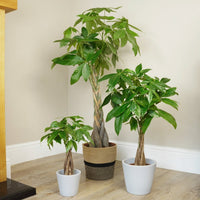


About the Areca Palm
The Areca Palm, Dypsis lutescens, is one of the most popular indoor palms in the UK and has been a staple of living rooms and conservatories for decades. It's native to Madagascar, where wild populations are actually classified as endangered due to habitat loss, though it's now widely cultivated across the tropics. The species was originally described by German-born botanist Hermann Wendland in 1878, and you'll sometimes see it listed under its old name Chrysalidocarpus lutescens in older plant books.
It goes by several common names: Butterfly Palm (because the fronds arch outward like butterfly wings), Bamboo Palm (the clustered, cane-like stems look a bit like bamboo), Yellow Palm, and Golden Cane. The "lutescens" in its botanical name means "becoming yellow", a reference to the yellowish-green stems and leaf stalks that develop as the plant matures.
NASA's Clean Air Study singled out the Areca Palm as one of the most effective air-purifying houseplants, particularly good at removing formaldehyde, xylene, and toluene. It also acts as a natural humidifier, releasing moisture into the air through its fronds, which is a genuine benefit in centrally heated UK homes during winter.
The Areca Palm is pet safe, which makes it a solid choice for households with cats and dogs. It pairs beautifully with other palms and dracaenas and looks particularly good alongside a Fiddle Leaf Fig or a Rubber Plant for a lush, tropical corner. If you're after air-purifying options specifically, have a look at our best air-purifying houseplants guide.
Light requirements
Areca Palms do best in bright, indirect light, ideally between 10,000 and 20,000 lux. In a UK home, a spot near an east-facing or west-facing window gives the right balance. South-facing windows are fine from October to March when the sun is weaker, but you'll want a sheer curtain or to pull the plant back a metre during summer to avoid leaf scorch.
They'll tolerate lower light conditions better than many palms, but growth slows noticeably and the fronds lose some of their golden-green vibrancy. In a north-facing room, the Areca Palm manages but it won't do well. You'll get sparse, pale growth and the lower fronds will yellow and drop more quickly than normal.
Direct sunlight is the real enemy here. The fronds are relatively thin and burn easily, developing bleached patches and brown, crispy tips. If your plant is near a south or west-facing window during summer, watch for these signs and move it if needed.
Watering
Areca Palms like consistently moist soil during the growing season. Water every five to seven days from March to September, allowing the top two to three centimetres to dry between waterings. These palms don't cope well with full dry-out periods the way succulents and cacti do.
In winter, reduce watering to every ten to fourteen days. The cooler temperatures and lower light mean the compost holds moisture for longer. Always check before watering by pushing your finger into the soil. If it's still damp below the surface, wait another day or two.
Areca Palms are sensitive to chemicals in tap water, particularly fluoride and chlorine. If your tap water is heavily treated (common in many parts of England), you might notice brown tips developing regardless of how well you water. Leaving tap water to stand overnight before using it helps the chlorine dissipate. Better still, use filtered water or collected rainwater if you can. For a seasonal breakdown, see our Areca Palm watering frequency guide.
Temperature and humidity
Keep your Areca Palm between 18 and 27C. It's a tropical species that doesn't handle cold at all. Below 10C, the fronds develop dark, water-soaked patches and the plant may not recover. In a UK home, this means keeping it away from single-glazed windows in winter, draughty front doors, and unheated rooms.
Humidity is important. Areca Palms want 50 to 60 per cent, which is achievable in most UK homes during summer but drops off a cliff once the central heating comes on in October. Brown, crispy frond tips during winter are almost always a humidity issue. A humidifier running nearby makes the biggest difference. Pebble trays and regular misting help too, but they're less effective on their own.
Don't place your Areca Palm directly next to a radiator. The blast of dry heat is the quickest way to brown the frond tips. A spot a metre or two from a heat source, with good airflow but no draughts, is ideal.
Soil and repotting
Areca Palms need a well-draining mix that retains some moisture. A good recipe: two parts peat-free houseplant compost, one part perlite, half a part coarse sand. This holds enough water to keep the roots happy without becoming waterlogged.
Repot every two to three years in spring (March to May), going up one pot size. Areca Palms have a relatively shallow root system that spreads outward rather than downward, so a wider pot is better than a deep one. Choose something with drainage holes. Terracotta or ceramic adds weight and stability, which helps with taller specimens that can become top-heavy.
When repotting, be gentle with the roots. Palm roots are brittle and don't recover well from heavy-handed handling. If the plant has produced multiple stems, you can divide it at this stage if you want to create new plants. For detailed instructions, visit our Areca Palm repotting guide.
Feeding
Feed every two to four weeks during the growing season (March to September) with a balanced liquid fertiliser at half strength. A general-purpose houseplant feed with an NPK ratio of 10-10-10 works well. Palm-specific fertilisers that include magnesium are even better, as Areca Palms are prone to magnesium deficiency which shows as yellowing between the leaf veins.
Stop feeding from October through February. Excess nutrients build up in the soil during the slower growing period and can damage the roots. If you notice white, crusty deposits on the soil surface, flush the pot thoroughly with clean water.
Propagation
Areca Palms are propagated by division rather than cuttings. When you repot in spring, look for clusters of stems that have their own root systems growing from the base. Gently separate these from the main clump, keeping as many roots intact as possible.
Pot each division into its own container with the same well-draining mix. Water lightly and keep in a warm spot (above 20C) with bright, indirect light. New divisions can look a bit sorry for themselves for the first few weeks while they settle in. Resist the urge to overwater during this period.
Growing Areca Palms from seed is technically possible but painfully slow. Germination alone takes six to eight weeks, and it'll be years before the seedling resembles anything like a mature palm. Division is the practical option for home growers. For the complete method, read our Areca Palm propagation guide.
Areca palms fill a corner well with their feathery fronds. Our Areca Palm arrives at a reasonable starting height, and there are other palms in the palm section if you want something taller or more compact.
Common problems
Areca Palms are relatively easygoing, but they do have a few recurring complaints in UK homes:
Brown frond tips: The single most common issue. Almost always caused by low humidity, fluoride in tap water, or both. Switch to filtered or rainwater and increase humidity with a humidifier or pebble tray. Trim the brown tips with sharp scissors for a tidier look. Read our full guide to Areca Palm brown tips.
Yellow fronds: Lower fronds naturally yellow and die as the plant grows. That's normal. If yellowing is widespread, suspect overwatering or root rot. Check the roots and cut back on watering if they're soft and dark. Read our full guide to Areca Palm yellow leaves.
Spider mites: These pests love the dry, warm conditions created by central heating. Check the undersides of fronds for fine webbing. Treat with neem oil or insecticidal soap and boost humidity to discourage them. Our spider mites guide covers treatment and prevention. Read our full guide to treating spider mites.
Root rot: Caused by overwatering or poor drainage. The plant wilts despite wet soil and the stems feel soft at the base. Unpot immediately, trim affected roots, and repot into fresh, well-draining compost. See our root rot guide for step-by-step recovery. Read our full guide to Areca Palm root rot.
Slow or no growth: Usually insufficient light or cold temperatures. Move the plant to a brighter, warmer spot. Areca Palms naturally slow down in the UK winter, so don't worry if growth pauses between November and February. Read our full guide to Areca Palm light requirements.