





My spring go to indoor plants for UK homes
SHOW ME THE PLANTSEvery March I get the same itch. The light shifts, the heating stops working quite as hard, it rains sideways for a week and then we suddenly get one bright day that makes every dusty leaf in the house look a bit sad. That's usually when I start moving pots around and customers start asking what to buy for a spring refresh.
I run a plant shop, but I also live in a fairly normal house with radiators, draughts and windows that collect condensation all winter. The plants in this guide are the ones I see doing well in both worlds. Ones that arrive in good shape, survive the journey, and cope with the stop start mix of sunshine and showers that passes for spring here.
I've split things into three parts: the plants I reach for most when someone asks what to get for spring, how I actually look after plants in my own house once the days get longer, and a run through of questions that land in my inbox every year.
Plants I lean on every spring
You do not need rare plants to make spring feel special. You need plants that forgive radiators, busy weeks and surprise cold snaps. These are the ones I've watched cope with that reality.
Swiss cheese plant (Monstera deliciosa)
If I could only send out one plant in March and April, it would probably be Monstera. The new leaves come out soft and pale then deepen in colour, and the gaps develop as it gets enough light. It turns a dull corner into somewhere you actually notice when you walk into a room.
Mine lives a little back from the sitting room window. Winter light is gentle there, but spring sun has started arriving earlier and brighter in recent years, so that spot can turn harsh without much warning. I poke a finger into the compost, wait until the top feels dry before I water, and always empty the outer pot afterwards. A splash of liquid feed once a month from March to early autumn keeps it happy.
Money tree (Pachira aquatica)
A lot of Money Trees go out as gifts, and a fair few end up being the plant that finally survives in a home that has killed everything else. The plaited trunk looks as if it should be fussy, but it is tougher than it looks.
Mine sits near a bright window, out of harsh midday sun. I water when the top of the compost is dry, pour slowly until it drains, then tip away anything that collects in the cover pot. The roots sulk if they sit in a puddle. In spring I give it a light feed every few weeks to keep that full, leafy top going.
Parlour palm (Chamaedorea elegans)
If you have a bedroom, a north facing room or a rental where you cannot rearrange everything for one plant, a Parlour Palm will probably work. They put up with gentle, never dramatic light and look good with almost any furniture.
In spring I edge mine a little closer to whatever light is available and keep it away from radiators. Compost that is slightly moist rather than wet is what you are after, a quick finger test every few days works better than any timetable. Once a month I add a foliage feed and, if I have rainwater to hand, use that for misting. It takes the edge off the dry air that lingers after months of central heating.
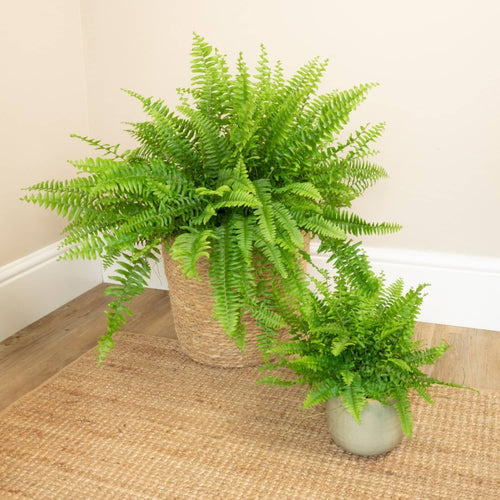
Boston fern "Green Moment"
Ferns are not beginners' plants, but a good Boston in the right place is worth the extra effort. Mine does best in the bathroom and a bright corner of the kitchen, where showers and cooking keep the air a bit more humid without me doing anything.
My spring routine is simple: cut away the brown bits, scratch off the top layer of tired compost and replace it with fresh peat free mix. Then I water a little more often once the new fronds start to appear. A tray of damp pebbles and a few sprays of rainwater make a bigger difference than any expensive gadget.
String of pearls (Senecio rowleyanus)
String of Pearls is the plant that makes visitors ask what it is. It's a little more demanding than the others here, but for a bright shelf or hanging pot in spring, nothing else looks quite like it.
I treat it like a succulent in a wig. Very sharp draining compost, a pot that doesn't hold on to water, a bright spot and a light hand with the watering can. I water when the beads start to look a touch less plump and the compost is properly dry. If you've collected rainwater over winter, save some for this one, let it warm to room temperature first.
Prayer plant "Lemon Lime" (Maranta)
Lemon Lime Maranta is one of the few patterned plants I recommend without checking how confident someone feels. Enough character to feel special, enough patience to forgive the odd mistake.
Mine sits where it gets good light but no harsh sun, and the compost stays lightly moist most of the time. Hard water can crisp the leaf edges, so I mix rainwater and cooled boiled water where I can. A diluted feed every month or so once it starts pushing new leaves is all it needs.
Snake plant (Sansevieria group)
When someone tells me they kill plants with watering, I almost always mention snake plants. They are not indestructible, but you have to try quite hard to upset them. Corners, draughts, forgotten weeks, they cope with most of the nonsense our houses throw at them.
In spring I pull mine a little closer to the window for the better light, but I avoid baking them in full midday sun against the glass. I water only when the top few centimetres of compost are dry, and even then I go carefully. After a long wet winter it is very tempting to water because it looks gloomy outside, but the plant cares about what is happening in its own pot, not on the street.
ZZ plant (Zamioculcas zamiifolia)
The quiet one. Does its thing in the background, copes with less light and forgives the odd missed watering far more kindly than most plants. Good drainage is essential and I do not move it much once it seems settled.
I water mine even less often than my snake plants. Rooms can swing between stuffy and cool quite fast in spring, and checking the compost rather than the forecast is the only way I've found to keep on top of it.
Aloe and other succulents
Bright, hot window ledges that crisp other plants? Aloe and its friends will sit there happily. They look neat, don't mind being near glass and suit the reality that spring sunshine in the UK can be stronger than people expect.
I use proper cactus compost, leave plenty of drainage and water in one deep go, then leave them alone until the compost is dry again. In my kitchen that can be every couple of weeks even when it's been sunny, far less if it's stayed grey. If you've collected rainwater through winter, it feels good to use some here instead of watching it all disappear down a drain.
How I tweak plant care for a British spring
I grew up with a fairly fixed idea of spring. Mild days, light showers, a coat you could probably leave at home after Easter. That picture doesn't really match what happens now, recent years have brought very wet winters, early springs and a lot of sunshine records that weren't supposed to break yet. Most of the adjustments I make in response are small, but they add up.
Watching where the sun actually lands
Labels that say "bright indirect light" are a starting point, not the whole story. At some point in early spring I walk around the house at different times of day and check where the sun hits walls, floors and plants. It reaches further into rooms than you'd expect, and it arrives earlier than it did even five years ago.
So ferns, prayer plants and other shade lovers move a bit further from the glass or behind a light curtain, and the tougher sun lovers move into the spots that would have been too gloomy in winter. A gentle game of musical chairs and it makes more difference to plant health than most bottles on the garden centre shelf.
Ignoring the rain and checking the soil
Outside, the ground can be saturated. Inside, the compost in your pots is bone dry. I've had to train myself to ignore the drizzle on the window and pay attention to the soil instead.
My routine is boring but it works. I press a finger into the compost or use a cheap moisture meter, water when it reads dry for that particular plant, and pour slowly until it runs from the base. Then I empty any outer pots so the roots are not left in cold water. Rainwater saved from winter goes to the more delicate plants that dislike hard tap water; ordinary tap water goes to the tougher ones.
Feeding gently over a longer season
Plants wake up at different speeds and that has shifted a bit, warmer springs mean some of them push new growth earlier than they used to. I don't fight this. I start feeding once I see clear signs of life on that specific plant: new Monstera leaves, fresh fern fronds, that sort of thing. Not a date in the diary.
I mix fertiliser at half the strength on the bottle and use it every four to six weeks through spring and summer, less often for slower growers or succulents. Over the last few years I've moved towards simpler, often organic feeds, partly for environmental reasons and partly because they're more forgiving when I'm not precise with the measuring spoon.
Repotting slowly
Spring repotting used to mean a big afternoon of pulling every plant out and giving it a much larger pot. I don't do that any more. Big pots of fresh compost can sit cold and damp for too long, especially after a wet winter, and I've lost plants to root rot that way.
Now I look for specific things: roots circling the bottom, compost that won't stay wet for more than a day, water that runs straight through without soaking in. If I spot any of those, I go up one pot size. If not, I scrape off the top few centimetres and top up with fresh peat-free compost instead. Big plants like indoor trees and mature Monsteras often just get this top-up approach and a better feeding routine, not a full repot every year.
Cleaning leaves and catching problems early
At some point in late winter I realise I cannot actually see the shine on my Monstera leaves any more. Dust builds up very quietly over months of heating and closed windows.
I put a podcast on, grab a soft cloth and wipe each leaf with plain water. Leaves clean up well, and going through them one by one catches tiny webs or sticky patches before they turn into something worse. When I do find something feeding where it should not be, I start with a gentle shower or horticultural soap and only move to stronger treatments if that fails.
Spring questions that come up every year
When spring hits, everyone suddenly has the same questions at once. Here are the ones I hear most.
Do my plants really need more water in spring when it is chucking it down outside?
Probably, but not because the pavement is wet. They need more water because they are growing again. The only thing that matters is what the compost is doing. Damp? Leave it. Dry down to your first knuckle? Water it well and let it drain.
Is rainwater worth the faff?
I think so, especially in hard water areas. Ferns, Calatheas, Peace Lilies and lots of trailing plants do noticeably better on softer water, and winters are wet enough now that most butts and buckets fill quickly. I strain out bits, let it come up to room temperature and avoid anything that smells off.
When should I start feeding?
When you see proper new growth on that plant. Not a calendar date a real new leaf or stem on your own plant. Some plants start earlier in well insulated homes, so I'd rather respond to what I can see than follow a rule written years ago.
What is safe if I am heavy-handed with the watering can?
Snake plants, ZZ plants and the tougher succulents. They give you breathing room if you forget when you last watered, as long as you use free draining compost and don't trap water in a pot without holes.
My house still feels dark. Is there any point in trying?
Yes. Most easy care plants are picked because they tolerate less than perfect light, not because they need a glasshouse. If you have a few very gloomy corners, a small grow light on a timer can make the difference between surviving and actually doing something and they're far less ugly than they used to be.
Are big statement plants a bad idea now the weather is all over the place?
Indoors, not really. Outside, gardens and parks deal with flooded soil one month and hosepipe talk the next, but your living room is fairly stable by comparison. Large Monsteras, Bird of Paradise, Yuccas and indoor trees settle happily into ordinary UK homes. The main thing is to choose something you actually like, put it somewhere sensible and commit to it rather than treating it as a seasonal prop.
How do I make my plant habit a bit kinder to the planet?
I don't have a perfect answer. Peat free compost, reused pots, sensible organic or vegan feeds and good use of rainwater all help. I've also noticed more people choosing a smaller group of solid, easy-care plants and sticking with them, rather than endlessly chasing rare things that often die within months. Honestly, that probably matters more than any single product swap.
My spring go to indoor plants for UK homes
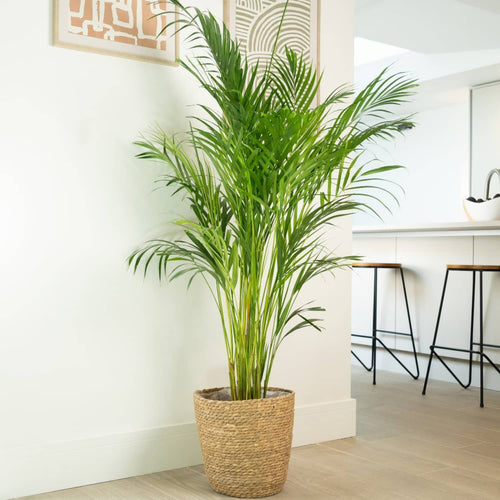
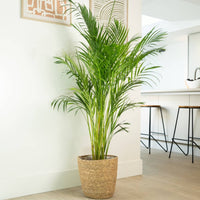
Areca Palm
Pet-friendly, air-purifying and excellent for beginners, these inspiring Areca Palms - also known as Dypsis lutescens- are fantastic for decorating at home, in the office and beyond with their vibrant glossy leaves & incredible tropical appearance! Their highly adaptable nature means they can thrive and shine just about anywhere that is sunny or partially shaded, and their straightforward care requirements make them superb for gifting to anyone regardless of experience. In the wild the Areca Palm variety is native to Madagascar, and by caring for yours, it'll care for you too by cleaning your air and providing numerous mental health benefits!
Please note decorative pots are sold separately and your plant may vary naturally to that shown depending on size selected and growth variance. Each plant tends to be different, just like us!
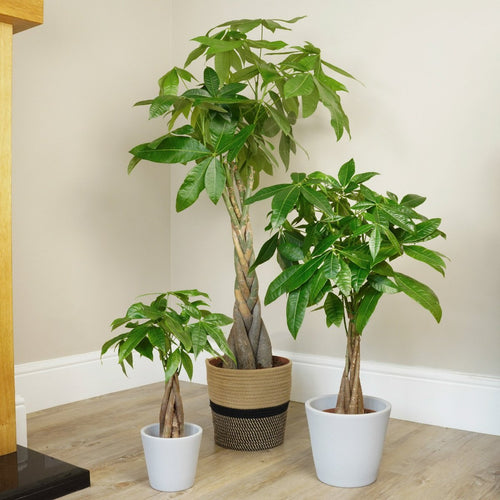
Money Tree
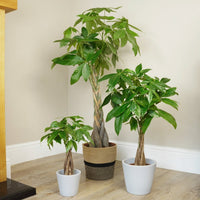
The Money Tree is the perfect way to invite wealth and prosperity into your home - according to Feng Shui! Even the tree has its fingers crossed with that plaited trunk. With fantastic textured green leaves spreading out like a star, this stunning tree makes an intriguing houseplant. The calming nature of this plant is said to reduce cortisol levels in the blood and decrease stress levels. Perfect for the bedroom for a good night's sleep!
Please note decorative pots are sold separately and your plant may vary naturally to that shown depending on size selected and growth variance. Each plant tends to be different, just like us! This variety is also very prone to some natural leaf/stem dropping, marks and breakages when moving environments, that is usually made up for with fresh new growth once acclimatised.
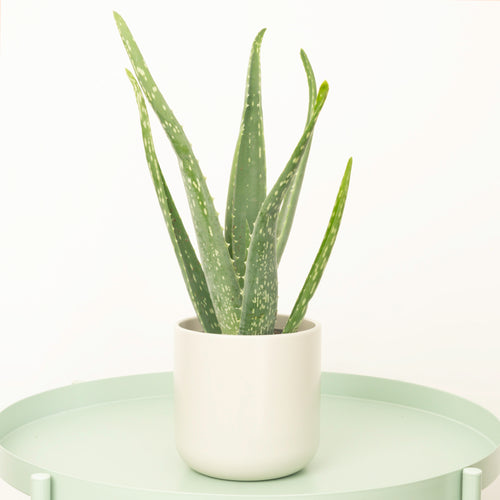
Aloe Vera
If you're looking for a great all-rounder as far as decoration, easy care & uses, these stunning Aloe Vera plants are an excellent choice! They have a gentle tropical look that is perfect for brightening up all sorts of spaces, can purify and remove toxins from the surrounding air, and their gel, when harvested, can be used for all sorts of purposes from helping calm cuts, burns and stings with its anti-bacterial, anti-inflammatory properties, to hydrating your skin and more! These make for a great gift to loved ones, family & friends due to these qualities and easy care, and by caring for your Aloe Vera, it's sure to take good care of you too!
Please note as a natural product, the plant you receive may vary to that shown in appearance, leaf/stem count and overall size. We always recommend going by your chosen variant's listed pot measurement and approximate 'overall' height for the best idea of how yours will look upon arrival. See our Size Guide above for further measurement guidance and decorative pot recommendations. Decorative pots sold separately.
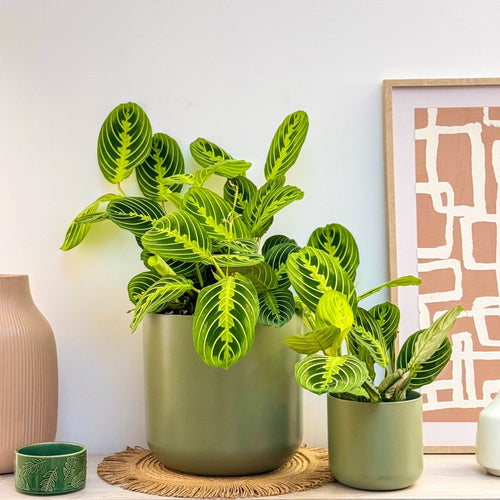
Prayer Plant | Lemon Lime | Rare Plant
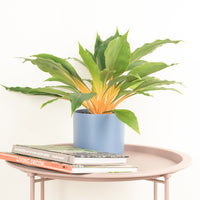
Looking for a plant with a little zest? This stunning Lemon Lime Prayer Plant is just that. The stunning leaves with bold light green stripes against the dark green are almost neon in colour. Your home will have a splash of the Mediterranean with this striking, dramatic and tropical house plant in situ. The prayer plant is aptly known due to the movement of the leaves dependant on the lighting and time of day. You may even hear it move!
Please note decorative pots are sold separately, and whilst rare, some dislodging may occur in transit. Prayer Plants consist of multiple cuttings.
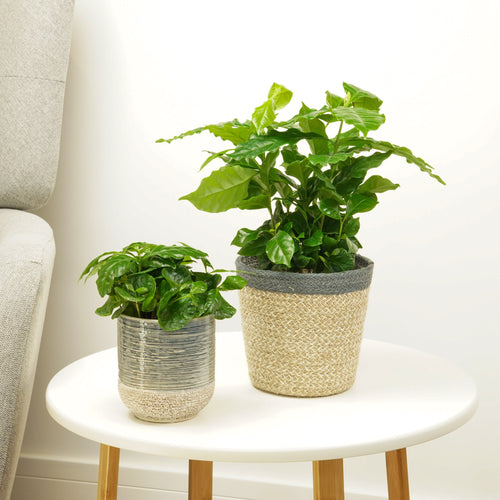
Coffee Plant | Arabica
Boston Fern | Green Moment
Renown across the world for their distinct tropical appearance, air-purifying qualities, pet-friendly nature & low care requirements, these stunning Green Moment Boston Ferns (also known as the 'Nephrolepis Exaltata') are a delightful variety that is sure to inspire! Great for beginners and seasoned growers alike, these are fantastic for adding a natural decorative touch at home, in the office and beyond with their vibrant green fronds and captivating style. Immensely adaptable too, these can shine beautifully whether sitting on a table or hanging in a basket indoors or out.
Please note decorative pots are sold separately and some frond loss is common when moving environments.

Rubber Plant | Robusta
A stunning tropical delight, these distinct Rubber 'Robusta' plants - also known as Ficus Elastica - are renown for their vibrant colours, large glossy leaves, and air purifying qualities. They're ideal for beginners and seasoned growers alike with their ease of care, and they are perfect for adding a natural decorative touch to all sorts of spaces too. Great as a desk, table or shelf plant, they can help promote a relaxed environment wherever they go, and they offer numerous mental health benefits as well! These are superb all-rounder plants that are sure to inspire and amaze.
Please note decorative pots are sold separately and your plant may vary naturally to that shown in stem and leaf count depending on size selected and growth variance. Each plant tends to be different, just like us!
Curly Spider Plant | Bonnie
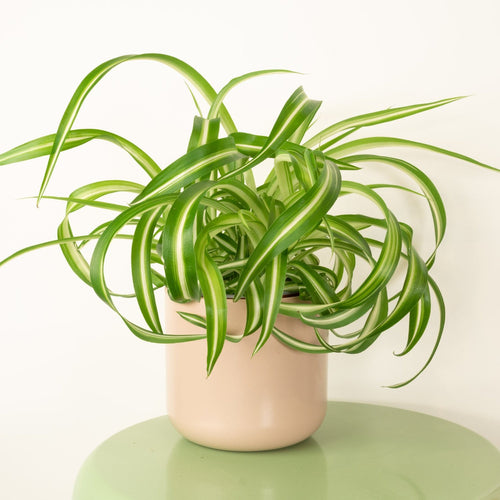
Spider plants are always at the top of the must-have plants lists for a few good reasons: they are super easy to keep, have air-purifying qualities and can be situated in most conditions with little complaint. The Bonnie is a fun take on the traditional Spider plant with its crazy curly leaves that go every which way. A bad hair day? No way!
Please note decorative pots are sold separately, and this variety is prone to some minor leaf scarring and bends when moving environments.
Fiddle Leaf Fig
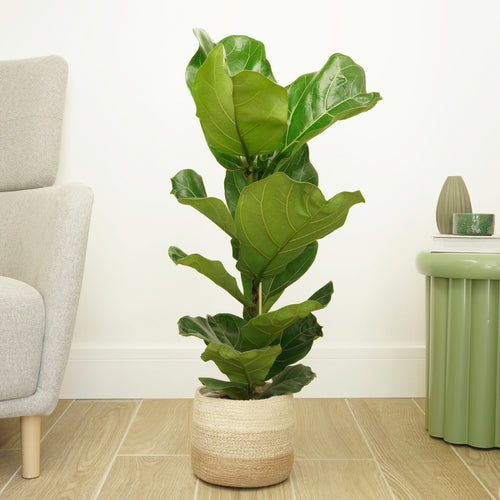
Broad lush green leaves shelter the earth below with paddle like cascades of shadows. An impactful plant with large leaves despite its more slender nature - this Fiddle Leaf Fig is a little bit dramatic, putting on a good show in any boring space. A perfect plant for a large corner in a bright room, creating height and depth of greenery in a space. An interesting plant that adds the classic style of a Ficus.
Radiator Plant | Hope
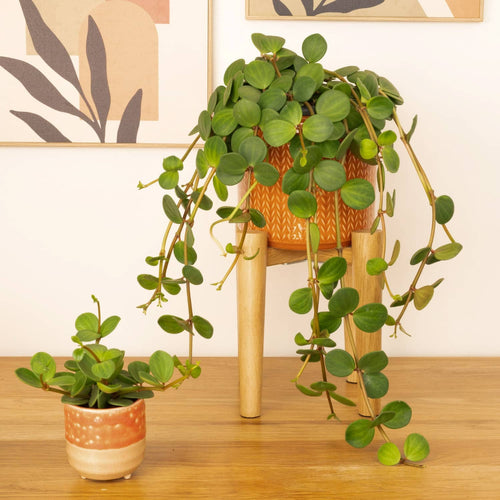
These captivating Radiator 'Hope' plants - also known as the Peperomia 'Hope' - are a popular evergreen epiphyte succulent admired for their easy care nature, compact versatility, and tropical vibes! They are ideal for beginners due to them needing very little care to thrive, and they're great for adding a natural touch at home, in the office and beyond with their stunningly vibrant foliage. Suitable hanging or sitting comfortably on a shelf/table, they also offer the added benefit of purifying your air and being pet safe - making them an incredibly rewarding variety to have around!
Please note decorative pots are sold separately and your plant may vary naturally to that shown depending on size selected and growth variance. Each plant tends to be different, just like us! This variety is also naturally prone to the odd few dropped or unhappy stems when moving environments - these won't be any concern to your plant's long-term health once settled, and can often be replanted or pruned off after arrival.